

So? True?
Planting your flag

One expression that really irritates me?
“So true.”
I’‘m reminded of what my high school English teacher used to say:
“You can’t be very unique or a little bit pregnant.”
some terms by their nature are binary. They either are or aren’t. There are no degrees of truth. You can approach truth, as you can approach the summit of a mountain, but you can’t plant your flag on Everest until you’ve reached the top. There are no Mostly True and Slightly False tests.
“It oughta be true.”
Many things that ought to be true unfortunately are not. The Lord of the Rings, in my opinion, oughta be true. But you’ll always find it in the fantasy section, never the non-fiction.
If you’re a writer, you’re familiar with this quote from Hemingway:
“All you have to do is write one true sentence. Write the truest sentence that you know.”
In true Hemingwayesque fashion, he does not elaborate. How does one arrive at that true sentence? Must all your writing be true, or can you fudge a little, skirt the truth if it’s too painful, or controversial?
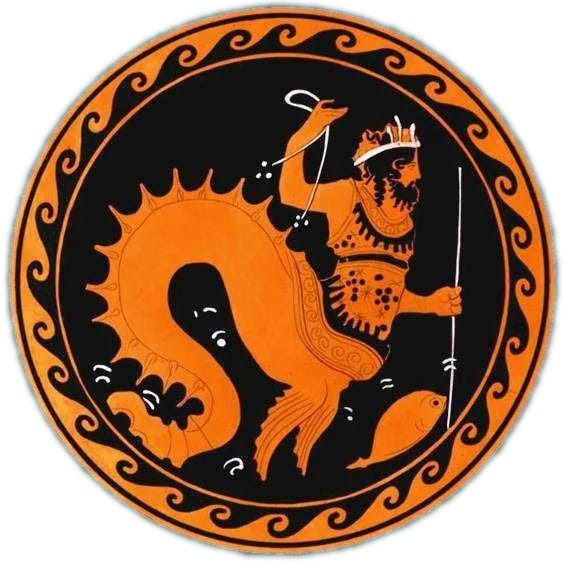
I’ll say this: it’s as hard to write truthfully as it is to climb a glass mountain, because lies take as many forms as Proteus: withholding, misdirection, obfuscation, projection, just to name a few. (And outright whoppers, of course.)
It’s not so much a question of subject matter, but of manner.
Some writers think it’s their job to manipulate the emotions of the readers, or to convince them of the writer’s point of view (sometimes using lies, damn lies, or statistics, to paraphrase Twain).
That attitude infuriates me.
We aren’t here to fool the readers, to pull the wool over their eyes, to make them dance to our tune. They aren’t abstractions, they’re flesh and blood humans, deserving of our respect. The only way to keep respecting ourselves is to afford them that respect. I, for one, do not wish to have to submit to the walk of shame.
I believe instead we’re here to invoke emotion, or lay out argument. We invite the reader in to examine our wares, not to play the shell game. The reader is not only a free agent, but a full collaborator in creation, “the indispensable collaborator” as Kurt Vonnegut calls them. For that magic to occur, they must be clear-headed and clear-eyed, just as the author must be.
So if you’re a fiction writer specifically, the question is: what is the nexus between truth and fiction?
Your plots won’t be true, obviously, unless you’re writing a roman a clef. Even then, the voltage is usually amped up, so that the thinnest of filaments will glow with heat. That’s what good fiction is: unsafe current. But it’s illuminating.

Your themes must be true, in that they are the things that truly gnaw at you when you lie awake at three in the morning. You have to wrestle with them like Jacob with the angel. You have to push all your chips to the middle of the table.
When Pope Leo, in his encyclical Magnifica Humanitas quoted these lines from J.R.R. Tolkien’s The Return of the King—
“It is not our part to master all the tides of the world, but to do what is in us for the succour of those years wherein we are set, uprooting the evil in the fields that we know, so that those who live after may have clean earth to till.”
I said earlier The Lord of the Rings was fantasy, but the pope recognized his theme as true.
Your characters must be true, truly human, with all the human strivings, limitations, dog-eared corners and quirks. This holds true even if your characters are an invading army of squids from the planet Xyllyx or talking animals.
Because what we seek in novels is the ability to look another human in the eye without shame. And those characters have to be willing to put it all on the line to reach their goals. Even Bartleby the Scrivener and Walter Mitty have consuming goals—one to be left alone with his daydreams, the other to be left alone entirely.
What else needs to be true? The rules of the game must be adhered to. This is where fiction diverges from reality. Humans are finally unpredictable in their behavior. Characters cannot be. Does this seem to contradict my last paragraph?
As Walt Whitman said:
Do I contradict myself? Very well then I contradict myself,
(I am large, I contain multitudes.)
—which is exactly what your characters cannot do. You must remember that they’re in a stage set made of pages. If characters lean too heavily against the walls or slam the door going out, the whole set can come down around you. Your characters should be multidimensional. They cannot be omni-dimensional. This doesn’t mean you can’t blend colors, but you’ve got to set up your palette beforehand, and stick to it (and you cannot mix metaphors willy-nilly as I have done).
Lastly, you’ve got to be true to the work. You’ve got to be steadfast. You’ve got to make the commitment to the hardscrabble road in front of you. You’ve got to see it through to the end, with all the detours and disappointments, all the compromises between your first flash of inspiration and your finished work.
I keep using the pronoun you, but the person I’m really admonishing , as Hemingway was, is myself.
(Audio version available HERE on Youtube.)
I know that I am an offender in this area. A phrase that really bothers me as well is "you’re not wrong". Doesn’t that make you right?
You're so right.